
Artificial intelligence in the lives of our animals: useful gadgets or technological drift?
By Dorothée Pâris • 31 October 2025
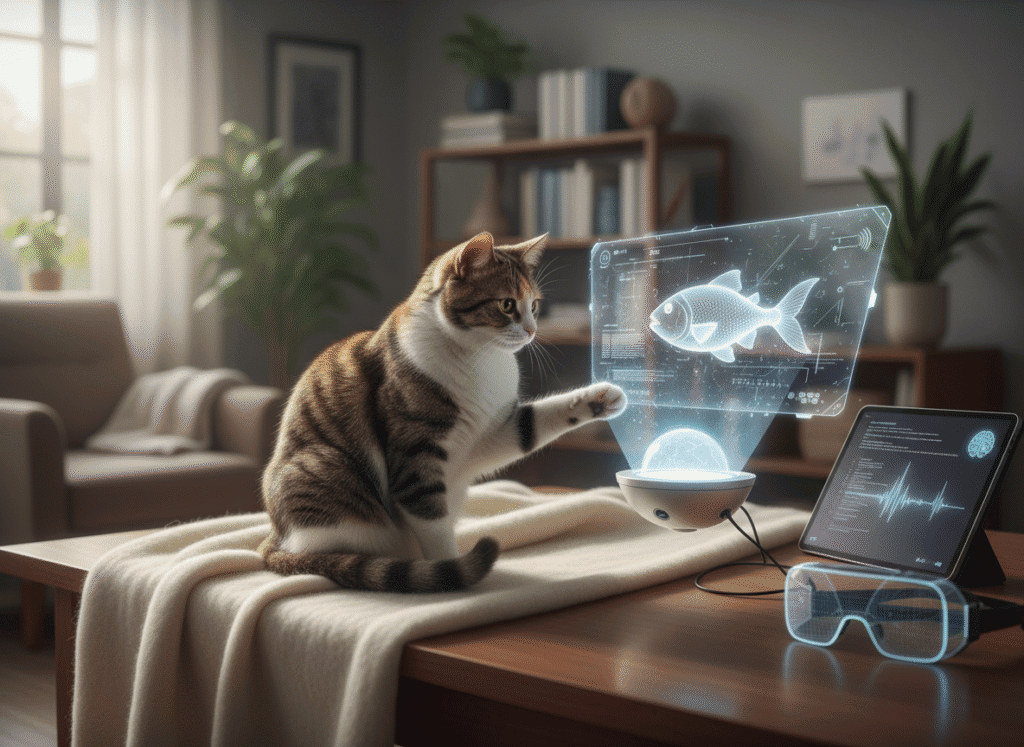
A collar that monitors your dog’s health, a camera that detects your cat’s emotions, an app that translates its meows… Artificial intelligence is now making its way into the homes of animal lovers. This technological wave promises to help us better understand our companions and take care of them, but it also raises several questions.
A booming “pet tech” revolution
The global pet technology market is already over ten billion dollars, and Canada is no exception. Connected collars, automatic feeders, smart litter boxes, interactive cameras… companies are now offering products capable of analyzing an animal’s activity, sleep, or even mood. BeroAI, based in Montreal, is developing a “multimodal” AI technology to analyze dogs’ emotions and behaviors—via audio, video, sensors, and more.
Some apps, like MeowTalk or Petpuls, use algorithms to interpret the sounds animals make, while others, like Whistle or FitBark, record health and exercise data. The goal: to offer owners unprecedented insight into their pets’ well-being.
AI in the service of animal health
The most promising advances concern prevention. Startups like Anivive and PetDx are using AI to detect certain health problems earlier by combining behavioral and physiological data. In Quebec, veterinarians are also beginning to take an interest: applications already exist that can detect changes in habits (inactivity, loss of appetite) before they become a cause for concern.
These tools obviously do not replace veterinary expertise , but they can become valuable allies for more regular and personalized monitoring.
Gadget or genuine breakthrough?
While the innovation is fascinating, its cost can be a deterrent: smart necklaces sell for between $100 and $400, often with a monthly subscription. And not all of them are reliable: several products still only provide approximate results.
Good news: local companies like Miaw Tech Montreal or Pawmetrics Canada are focusing on more affordable products designed for the needs of Quebec homeowners.
Some experts, however, point out that a relationship of trust and observation remains more valuable than a sensor. The Canadian Veterinary Medical Association (CVMA) advises individuals to contact their provincial or territorial regulatory body for up-to-date information on relevant standards and policies regarding the use of artificial intelligence technologies in their province or territory.
Technology and ethics: finding the balance
These tools also raise privacy concerns: what happens to the collected data? And by measuring everything, aren’t we risking turning our pets into connected devices?
The key is to see AI as an aid, not a surveillance tool. Our animals need presence, attention, and play far more than algorithms.




Leave a Reply