
Things to know before adopting a rabbit
By Proanima • 27 March 2026
Many families decide to adopt a rabbit, believing it requires less care than a cat or dog. It is also a pet often requested by children, especially when it’s not possible to have a larger animal at home or in cases of allergies.
But be careful!
Here are several important facts, validated by recent animal welfare recommendations:
⚠️ Before adopting: often underestimated realities
- Rabbits can cause allergies (often related to hay , dust, or proteins present in saliva and urine).
- This is not an ideal animal for young children : it is fragile, stressed by handling and can easily get injured.
- Rabbits need plenty of space and should not live in cages permanently (current recommendations favour freedom or large enriched enclosures).
- It can live 10 to 12 years , sometimes longer with good care.
- Specialized (exotic) veterinary care is more expensive and less accessible .
- Sterilization is strongly recommended , both for health (uterine cancers are very common in females) and for behavior.
- Rabbits communicate a lot through their behavior: they may bite if they are stressed or if their boundaries are not respected.
- Rabbits are social and often benefit from the presence of another rabbit… but introductions must be done methodically.
❤️ The positive points
- The rabbit can be clean and use a litter box.
- He is intelligent, curious, and endearing.
- It can learn routines and certain behaviors
- He develops a unique relationship with his human
- It can live with other animals (with supervision and adaptation)
- It is a crepuscular animal (active morning and evening), which makes it well-suited to various lifestyles.
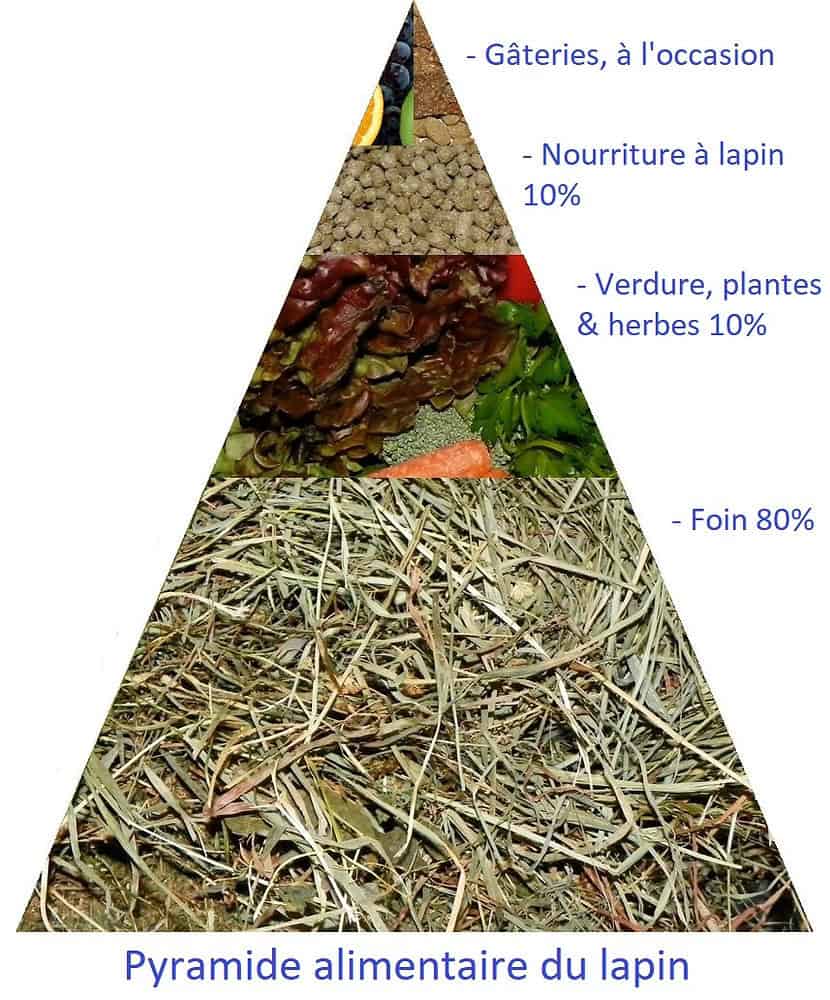
???? Nutrition (important update)
Essential base
- High-quality hay (timothy or meadow hay) should make up 80 to 90% of the diet and be available at all times.
- The granules should be limited (often even more than previously recommended):
- about 1 to 2 tablespoons per day for an average adult rabbit
- Fresh water at all times (bowls are now strongly recommended rather than bottles)
Vegetables
- Approximately 1 to 2 cups per day for every 2 kg (4-5 lb)
- Important variety (rotation recommended)
Examples:
- Lettuce (except iceberg), cilantro, parsley, arugula
- Dandelion leaves, carrot tops
- Celery, bell pepper, herbs
Fruits
- Very occasional (high sugar)
???? maximum 1 to 2 teaspoons per day

???? Maintenance and hygiene
- Daily cleaning of the litter box and soiled areas
- Rabbits are generally clean and quickly learn to use the litter box.
- Regular brushing is essential during shedding season (to prevent digestive blockages).
⚠️ Important:
Rabbits cannot vomit , so hairballs can become dangerous → a diet rich in hay is essential.
???? Cohabitation
- Rabbits are happier in pairs , ideally neutered.
- The bonding process (introduction) can be lengthy and needs to be structured.
- Cohabitation with cats/dogs is possible, but always supervised.

???? Veterinary care
- Annual visit recommended (minimum)
- Essential monitoring:
- teeth (continuous growth)
- digestion (very delicate)
- Frequent emergency:
???? Stop eating or defecating = VETERINARY EMERGENCY
???? More and more veterinarians are recommending:
- Vaccination in certain regions (e.g., emerging viral diseases such as RHDV, depending on the area)
- Weight and diet monitoring
???? Environment
- Supervised or semi-freedom is now the recommended standard
- Commercial cages are unsuitable on their own.
- Essential enrichment:
- hiding places
- tunnels
- platforms
- areas for digging
⚠️ Mandatory security measures:
- electrical wires
- poisonous plants
- chewable objects

???? Exercises and stimulation
- A minimum of 3 to 4 hours of free activity per day (recommendations have increased)
- Essential toys:
- objects to chew on (safe wood, compressed hay)
- food games (foraging)
- cardboard boxes and tunnels
???? Foraging (searching for food) is now strongly encouraged for mental well-being.
???? Behavior (better understood today)
- The rabbit is prey → easily stressed
- He generally doesn’t like being carried
- The bites are often:
- territorial
- related to fear
- or poor human communication
???? Modern approach:
- prioritize ground interaction
- let the rabbit come to us
- use positive reinforcement
???? Conclusion
The rabbit remains one of the most misunderstood animals and unfortunately still very much abandoned.
Today, we know that:
???? This is neither an easy animal nor a child’s pet
???? It’s a complex, social, and demanding animal.
A rabbit should never be a “plan B” to a cat or dog.
✔️ Before adopting
- Speak to experienced landlords
- Consult an exotic animal veterinarian
- Consider fostering
- Get informed through reliable resources (specialized shelters, recognized organizations)
???? Check out our post-adoption advice for rabbits
This article might also interest you:
Allergies: how to live with an animal
Want to know EVERYTHING about rabbits? Check out the website The Hard Life of the Urban Rabbit .




Leave a Reply